Structural Drying in Santa Fe Springs, CA
Water that has soaked into framing, floors and cabinets will not leave by itself. The drying team places air movers and dehumidifiers and returns each day to read the results.
(888) 563-9619Ask about drying equipment sizing- Air movers and LGR units
- Daily psychrometric readings
- Dry goal confirmed in writing
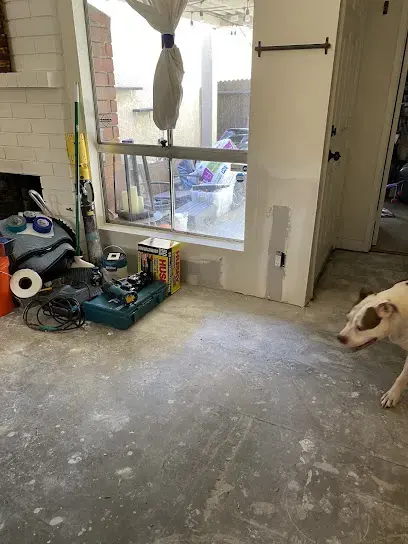
First steps for structural drying in Santa Fe Springs
- 1
Classify the loss
The tech sets the water class and category, which decides how much equipment the rooms need to dry properly.
- 2
Place the equipment
Air movers and dehumidifiers go where the moisture map shows the wettest materials, not just in the middle of the room.
- 3
Read every day
Moisture, temperature and humidity readings show whether the drying is working.
- 4
Remove when dry
Equipment leaves only after each material reaches its dry goal.
How structural drying is handled in Santa Fe Springs
Sizing by class
Class 1 to Class 4 describe how much water the materials absorbed. Higher classes call for more dehumidification and special tools such as drying mats and desiccant units.
Air movers and dehumidifiers work together
Air movers push dry air across wet surfaces to lift moisture, and LGR dehumidifiers pull the moisture out of the air so the room does not simply recirculate it.
Cabinets, floors and wall cavities
Cabinet bases, hardwood and the cavity behind drywall dry slowly. Mats, small holes and focused airflow reach those layers without removing them where they can be saved.
Daily logs and adjustments
Each visit the tech records readings, moves units that are not pulling water and adds equipment if the numbers stall, and the log becomes the proof of drying.
What does structural drying cost in Santa Fe Springs, CA?
Structural drying in Santa Fe Springs usually costs $1,500 to $9,000, depending on the number of rooms, the class of the loss and whether cabinets and wall cavities need special drying.
The drivers are the water category, the square footage that got wet, the material class and how fast drying started. The water damage cost calculator gives a planning range; a firm number comes after the walkthrough.
How structural drying moves from wet to dry
- 1
Classify
Record moisture, temperature and humidity every day
- 2
Place
Position air movers and dehumidifiers on the map
- 3
Read
Position air movers and dehumidifiers on the moisture map
- 4
Release
Remove equipment only when every reading is dry
Pulling water off the floor is only half of a restoration job. Drywall, studs, subfloor and cabinets hold moisture long after the surface looks fine, and in Santa Fe Springs the same drying science applies to a small home and to a large industrial building.
What the drying team sets up
- Air movers aimed along walls and across floors
- LGR dehumidifiers sized to the volume of the rooms
- Drying mats for hardwood, tile and concrete
- Meters and thermal cameras for readings each day
- Desiccant or extra units when the class calls for it
Why readings decide when drying ends
A room can feel dry while the framing is still wet. The tech compares each reading with a dry reference from an unaffected area, and equipment stays until the two match.
Temperature and humidity are logged along with the moisture numbers, which shows an adjuster that the equipment ran as planned.
Cabinets and built-ins get special treatment. A small opening in the toe kick lets air reach the cavity behind, so the base can dry without being torn out, and the tech checks it again the next day.
Homes and larger buildings
A house usually needs a handful of units in a few rooms. A warehouse or an office floor needs more equipment, careful power planning and a schedule that fits the building's use. The method is the same, and the number of readings grows with the area. The water extraction page covers the step before drying, and the commercial water damage page covers large buildings.
Emergency dispatch for Santa Fe Springs, CA
Wet framing and cabinets in a Santa Fe Springs building dry only with controlled airflow and daily readings, which the crew keeps up.
Structural drying across Santa Fe Springs, CA
The crew covers ZIP 90670 and the whole city, from the Heritage Park area and Four Corners to Carmenita and the Telegraph Road, Norwalk Boulevard and Florence Avenue corridors. Homes, rentals, warehouses and shops all get the same careful approach.
See every area servedStructural Drying and Dehumidification questions in Santa Fe Springs, CA
Water still coming in?
The Santa Fe Springs restoration crew rolls day and night, weekends and holidays included.
Talk the damage through with a Santa Fe Springs proHow long does structural drying take?
Many jobs take a few days, though higher classes and dense materials take longer. Daily readings, not a fixed schedule, decide when it ends. Thick materials such as concrete take longer.
Why are dehumidifiers needed with air movers?
Air movers lift water from surfaces into the air. Dehumidifiers remove that moisture so the air can keep absorbing more.
Is the noise normal?
Yes. Drying equipment is loud, and it runs continuously, which is part of why it works. The crew explains the placement and the power use.
Can hardwood floors be dried instead of replaced?
Often, when the water is caught early. Mats and focused airflow can dry cupped boards, and the readings show whether they recover.
What does the dry goal mean?
It is the moisture level of the same material in an unaffected part of the building. Drying is complete when the wet material reaches it. That reference is measured on site.
Does insurance cover drying equipment?
Equipment days are usually part of a covered water claim. The insurer decides, and the logs show which units ran and for how long.
Can drying start before repairs?
Yes. Drying comes first, and rebuilding waits until the materials reach the dry goal. Closing up wet walls traps moisture and invites trouble later.
Wet walls or floors in Santa Fe Springs? Call the drying team
Describe the rooms and the type of water, and the drying team will size the equipment to the building.