Structural Drying & Dehumidification in Pico Rivera, CA
Structural drying pulls water out of the slab, framing, drywall and cabinets, not just off the surface. The drying team sizes the equipment to the loss and runs it until the readings say dry.
(888) 563-9619Get the drying team set up- LGR dehumidifiers
- Psychrometric logs
- Dry reference readings
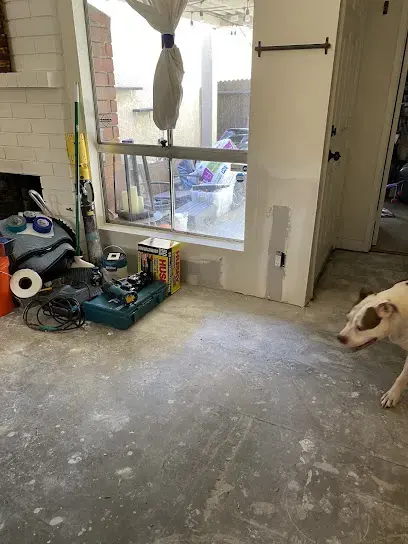
First steps for structural drying in Pico Rivera
- 1
Stop the water
The source has to be off before drying can work.
- 2
Keep the house closed
Keep doors and windows shut so dehumidifiers control the air.
- 3
Leave equipment running
Do not turn off air movers or dehumidifiers between readings.
- 4
Note changes
Tell the crew about new stains, smells or warped flooring.
How structural drying is handled in Pico Rivera
Map and set the goal
The tech maps every wet material and takes a reading on the same material in a dry room, which sets the dry goal for the job.
Size the equipment
The drying team works out air movers and dehumidifiers from the class of the loss and the room size, and adds drying mats for hardwood and concrete.
Control the air
LGR dehumidifiers pull water from the air so wet materials keep giving it up, and the house stays closed so the equipment controls conditions.
Read and adjust daily
Daily readings of temperature, humidity and material moisture go in a psychrometric log, and equipment moves to the slowest areas.
What does structural drying cost in Pico Rivera, CA?
Structural drying in Pico Rivera usually runs $1,500 to $6,000, depending on the class of the loss, the number of rooms and how many days the equipment runs. Extraction and removal are priced separately.
The drivers are the water category, the square footage that got wet, the material class and how fast drying started. The water damage cost calculator gives a planning range; a firm number comes after the walkthrough.
How structural drying moves from wet to dry
- 1
Map
The tech maps moisture and sets the dry goal.
- 2
Set
Equipment is sized to the class.
- 3
Read
Readings are logged every day.
- 4
Confirm
Equipment leaves when materials read dry.
Structural drying is the part of water damage restoration nobody sees and everybody pays for later if it is skipped. Surfaces can feel dry in a day, while the slab, the bottom plates and the cabinet bases still hold enough water to warp flooring and grow mold.
How structural drying works
Air movers sweep moist air off wet surfaces so they keep evaporating. Dehumidifiers pull that moisture out of the air. Low grain refrigerant (LGR) units keep working at lower humidity than standard dehumidifiers, and desiccant units handle Class 4 losses in dense materials like concrete and hardwood.
The drying team balances the two. Too many air movers without enough dehumidification just raises humidity in the house.
Structural drying in Pico Rivera slab homes
- Concrete slabs hold water for days and need drying mats or targeted airflow.
- Bottom plates sit on the slab and wick water up into the wall.
- Particleboard cabinet bases swell when they stay wet.
- Hardwood over a slab cups unless the drying starts fast and slow.
Readings decide when structural drying ends
Every day the crew logs temperature, relative humidity and moisture in the wet materials. The job ends when materials read within 2 to 4 points of the dry reference, not on a set day. Those logs go in the claim file.
Fast drying is the best mold prevention. The EPA mold page explains the 24 to 48 hour window, and the EPA indoor air quality pages cover humidity in the home.
Emergency dispatch for Pico Rivera, CA
The drying team sets and monitors structural drying around the clock across Pico Rivera, from one room to a whole house.
Structural drying across Pico Rivera, CA 90660 to 90662
The restoration team covers all of Pico Rivera in ZIPs 90660, 90661 and 90662, from North Pico Rivera near Whittier Narrows to the homes along Slauson Avenue and Telegraph Road, between the Rio Hondo and the San Gabriel River, with Montebello, Downey and Santa Fe Springs close by.
See every area servedStructural Drying and Dehumidification questions in Pico Rivera, CA
Water still coming in?
The Pico Rivera restoration crew rolls day and night, weekends and holidays included.
Talk the damage through with a Pico Rivera proHow long does structural drying take?
A Class 1 or 2 loss usually dries in three to five days. Concrete, hardwood and cabinets take longer. The job ends on readings, not a calendar date.
Why can't I just open windows and run fans?
Outside air can be more humid than the drying needs, and fans alone push moisture into other rooms. Dehumidifiers control the air so wet materials keep drying.
What is an LGR dehumidifier?
A low grain refrigerant dehumidifier keeps pulling water from the air at lower humidity than a standard unit, which speeds drying of dense materials.
Can I turn the equipment off at night?
No. Drying depends on steady conditions. Turning equipment off lets humidity climb and adds days.
What is a dry reference?
It is a reading on the same material in an unaffected room. Wet materials are dry when they read within 2 to 4 points of it.
Is the drying documented for insurance?
Yes. The psychrometric log, the moisture map and the final readings go in the claim file.
Need a Pico Rivera dry-out done right?
Surface-dry is not dry. Get the slab, walls and cabinets dried to the readings.