Structural Drying in Downey, CA
After a leak or storm is extracted, the structure still holds water in framing, slab and cabinets. The drying team places equipment by water class and reads the moisture every day until the goal is met.
(888) 563-9619Wet walls or floors? Call to dry- Equipment sized by class
- Daily psychrometric logs
- Final dry readings
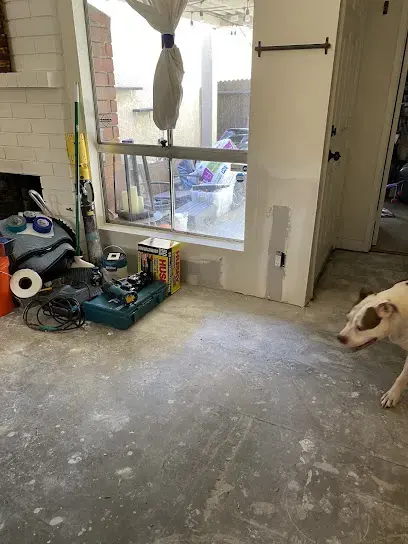
First steps for structural drying in Downey
- 1
Classify the loss
Water class and affected materials set the equipment plan under the S500 standard.
- 2
Place equipment
Air movers, dehumidifiers and mats are positioned to move air across wet surfaces and pull moisture from the room.
- 3
Read every day
Meters and a hygrometer track materials, air and humidity, and equipment is moved as the readings change.
- 4
Confirm and remove
Wet materials are compared with an unaffected area, and equipment comes out only once the goal is met.
How structural drying is handled in Downey
Equipment sized to the class
The water class describes how many absorbent materials are wet and how deep the water went, and the number of dehumidifiers and air movers follows that class rather than the room size alone.
Wood floors, slab and cabinets
Hardwood and slab use drying mats, while cabinet bases and wall cavities get directed airflow through small openings, so moisture leaves the material instead of the room only.
Why daily readings matter
A surface that feels dry can still hold water inside, so readings at the same spots each visit show whether drying is moving or stalled, and equipment changes follow.
A record the adjuster can read
Psychrometric readings of temperature, humidity and grains are logged with photos of the equipment, which proves the drying was monitored until the structure matched the dry goal.
What does structural drying cost in Downey, CA?
Structural drying in Downey runs $1,500 to $2,500 for one room, $2,500 to $4,500 for several rooms and $4,500 to $9,000 for a whole house or a Class 4 loss with dense materials.
The drivers are the water category, the square footage that got wet, the material class and how fast drying started. The water damage cost calculator gives a planning range; a firm number comes after the walkthrough.
How structural drying moves from wet to dry
- 1
Classify
Water class and materials set the equipment plan.
- 2
Place
Air movers, dehumidifiers and mats go where the water is.
- 3
Read
Meters check materials and air at the same spots daily.
- 4
Release
Equipment comes out once the dry goal is met.
Structural drying is the long middle of a water loss. Once the standing water is out, wet framing, concrete, drywall and cabinets still hold moisture, and the drying team follows the same general steps in Downey as anywhere else, with equipment matched to the water class and the materials.
What the equipment does
- LGR dehumidifiers pull water vapor out of the air so materials can release moisture
- Air movers push air across walls, floors and cabinets to speed evaporation
- Drying mats lift moisture from hardwood and concrete surfaces
- Thermal cameras and meters find wet spots that look dry
- A hygrometer tracks temperature and humidity in each room
Why drying takes several visits
Wet materials release water slowly, and the air in a closed room fills with it fast. If the dehumidifiers fall behind, the moisture settles back into drywall and wood, so the team adjusts the setup as the readings change.
Containment with plastic sheeting keeps the drying zone small, and doors, closets and cabinets are opened so air can reach the corners where moisture hides. Nothing is called dry until the meter says so. The tech also checks that closets and cabinet bases are not trapping humid air.
After the equipment leaves
The final visit compares wet materials with an unaffected area and records the numbers, so the owner and the adjuster hold proof of a finished dry-out. If the job began with water extraction, the same photos and readings carry into one continuous file. Rebuilding can then start on dry framing.
Emergency dispatch for Downey, CA
Structural drying in Downey is complete only when wet materials match the dry reference, and the daily log shows how they got there.
Structural drying across Downey, CA
The Downey restoration crew covers the whole city, from Downtown Downey and the shops at Downey Landing to the blocks around Stonewood Center, across ZIP codes 90239, 90240, 90241 and 90242 after a leak, flood or sewer backup.
See every area servedStructural Drying and Dehumidification questions in Downey, CA
Water still coming in?
The Downey restoration crew rolls day and night, weekends and holidays included.
Talk the damage through with a Downey proHow long does structural drying take?
Most losses need drying for several days, and the readings decide the end date. Dense materials such as slab, hardwood and thick framing hold water longer than drywall.
Why are the machines so loud?
Air movers and dehumidifiers run continuously to pull water out of materials, and the noise is a sign of airflow doing its job. The crew can group equipment to limit disturbance.
Can fans from a hardware store do the same job?
Fans move air but do not remove moisture from it. Without a dehumidifier the humidity stays high and materials dry slowly, which is why drying equipment is sized and monitored.
What does Class 4 mean in a water loss?
Class 4 describes deep water in dense materials such as hardwood, plaster or concrete, and it calls for extra dehumidification, drying mats and sometimes desiccant units.
Is the equipment safe to leave running overnight?
Yes. The crew sets cords and units so they run safely on dedicated circuits where needed, and the tech explains what to leave on and what to leave alone.
How does the insurer know the structure is dry?
The final log lists readings from wet materials and from an unaffected reference area, with dates and photos, so the adjuster can see the goal was met.
Wet walls or floors in Downey? Call the drying team
A dispatcher explains what to open and what to leave alone, then routes a drying crew with dehumidifiers and air movers.