Commercial Water Damage in Downey, CA
Downey has hospitals, shopping centers, schools and downtown businesses, and a water loss in any of them stops work. The crew plans extraction and drying around operating hours and keeps records for the owner.
(888) 563-9619Business flooded in Downey? Call now- Drying around business hours
- Ceiling tile and carpet tile
- Logs for owners and insurers
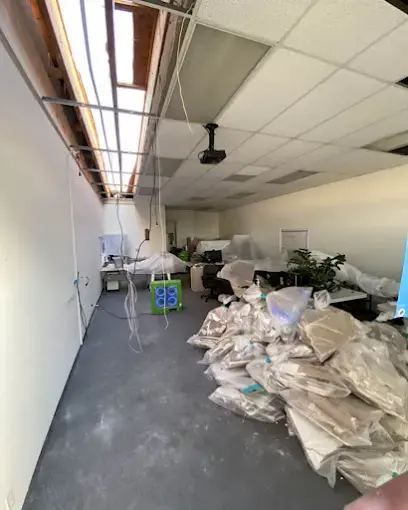
First steps for commercial water damage restoration in Downey
- 1
Assess the space
The tech walks the floor with meters, notes occupied areas and sets a drying plan around business hours.
- 2
Extract and protect
Slab, carpet tile and floor coverings are extracted, and stock, files and equipment are lifted clear.
- 3
Remove and contain
Wet ceiling tiles and drywall are removed, and plastic containment keeps open areas separate.
- 4
Dry and document
High-volume dehumidifiers run with daily logs, and an itemized scope goes to the owner and insurer.
How commercial water damage restoration is handled in Downey
Hospitals, retail and offices
Downey's commercial base mixes Kaiser Permanente, Rancho Los Amigos National Rehabilitation Center, Stonewood Center, schools and Downtown Downey shops, and each type of space needs a different drying plan.
Working around operations
Drying is planned around opening hours, with equipment placed to leave aisles and exits clear and noise and cords managed so staff and customers can keep working where it is safe.
Ceilings, tile and slab
Suspended ceiling tiles and insulation above are removed when wet, carpet tile is lifted in sections and slab floors are dried with mats so a floor plan is not torn up.
Owner and insurer records
Photos, readings, an itemized scope and equipment logs support business interruption and property claims, and the crew keeps them organized by room and date.
What does commercial water damage restoration cost in Downey, CA?
Commercial water damage in Downey runs $3,000 to $7,000 for a small office or shop, $7,000 to $15,000 for a retail or office floor and $15,000 to $30,000 for a warehouse slab.
The drivers are the water category, the square footage that got wet, the material class and how fast drying started. The water damage cost calculator gives a planning range; a firm number comes after the walkthrough.
How commercial water damage restoration moves from wet to dry
- 1
Walk
Meters and a floor plan mark occupied and wet areas.
- 2
Extract
Slab, carpet tile and floor coverings are extracted.
- 3
Contain
Wet ceiling tile removed and plastic walls set up.
- 4
Dry
High-volume dehumidifiers run with daily logs for the owner.
A water loss in a business costs money for every day the doors stay shut. The crew treats offices, shops, clinics and warehouses as separate drying problems, because carpet tile, suspended ceilings and slab floors each need their own approach.
What a business loss involves
- Walkthrough that marks occupied, wet and critical areas first
- Extraction of carpet tile, resilient flooring and slab with truck-mounted or portable units
- Removal of wet ceiling tiles, insulation and drywall
- Containment so dust and moisture stay out of open areas
- Daily readings and an itemized scope for the owner and the insurer
Keeping a Downey business running
Clinics and offices need quiet hours, retail needs open aisles and a warehouse needs forklift paths, so the drying plan starts with how the space is used. Equipment is placed to protect exits and to keep dry areas open.
Stock, files and electronics are lifted off wet floors first, and anything sensitive to moisture is moved to a dry area before extraction begins. The tech lists what was moved, so no one has to guess later. Dry areas get tape and signs so customers and staff know where equipment is running.
Records for owners, landlords and insurers
Businesses often lease their space, so the landlord, the tenant and each insurer may all need the same facts. The crew keeps one record by room and date, and the structural drying log shows the readings that closed the job. Coverage for business interruption is a policy question for the insurer.
Emergency dispatch for Downey, CA
Commercial jobs end with dry readings across every affected room and one organized record that owners, landlords and insurers can use.
Commercial water damage restoration across Downey, CA
The Downey restoration crew covers the whole city, from Downtown Downey and the shops at Downey Landing to the blocks around Stonewood Center, across ZIP codes 90239, 90240, 90241 and 90242 after a leak, flood or sewer backup.
See every area servedCommercial Water Damage questions in Downey, CA
Water still coming in?
The Downey restoration crew rolls day and night, weekends and holidays included.
Talk the damage through with a Downey proCan drying be done while the business stays open?
Often yes for part of the space. The tech marks the wet zone, sets equipment to protect exits and aisles and keeps affected areas separate with containment when needed.
What about carpet tile and ceiling tile?
Carpet tile can often be lifted in sections and dried or replaced, while wet ceiling tiles are removed because they sag, stain and hold water above the room.
Who documents the loss for a landlord and tenant?
The crew records the source, the rooms and the materials in one file by date, so the landlord, the tenant and each insurer can work from the same record.
How are large warehouse floors handled?
Large slabs are extracted with high-volume equipment and dried with dehumidifiers sized to the open area, with readings taken across a grid so no wet pocket is missed.
Does a sewage backup shut a business down?
It can. Sewage areas are contained and closed off until surfaces are treated and cleared, though unaffected rooms can often stay in use behind containment.
Does business insurance pay for water damage?
Property policies often cover sudden water damage, while income loss may need separate coverage. The insurer decides, and the crew supplies the scope, photos and drying logs the adjuster can use.
Water in a Downey shop, office or clinic? Call now
A dispatcher takes the details, explains what to protect and routes a crew to extract and plan the drying.