Structural Drying in Montebello, CA
Drying walls, floors and framing back to normal moisture is the same careful process in any building, and the drying team measures every step so the result is a number, not a guess.
(888) 563-9619Wet walls in Montebello? Get readings first- S500 dry goal
- LGR dehumidifiers
- Daily psychrometric logs
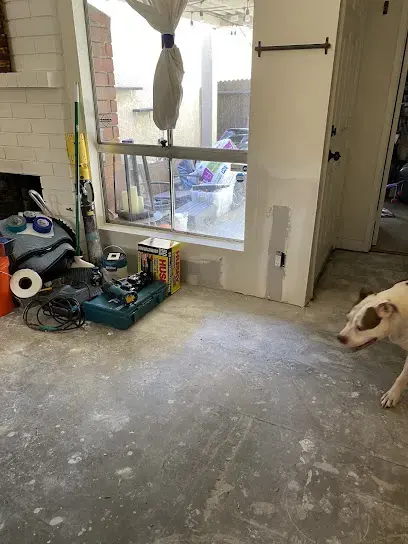
First steps for structural drying in Montebello
- 1
Set a dry goal
The tech takes readings in unaffected rooms to learn what dry looks like for this building's materials.
- 2
Size the equipment
Air movers and dehumidifiers are chosen by the class of loss and the cubic space being dried.
- 3
Monitor daily
Each visit records temperature, humidity and moisture readings, and equipment is moved as areas dry.
- 4
Confirm and remove
Equipment comes out only after final readings match the dry goal at every point checked.
How structural drying is handled in Montebello
Classify the loss
The class of loss describes how much water the materials hold and how quickly they release it. Class decides how many air movers and dehumidifiers the setup needs.
Control the air
Dehumidifiers remove moisture from the air, and air movers push dry air across wet surfaces. The two work together, which is why the room stays closed while equipment runs.
Dry the dense materials
Hardwood, concrete and cabinet bases release water slowly. Drying mats and extra airflow pull moisture from those materials without cracking or cupping them.
Keep a written log
Temperature, relative humidity and moisture readings go into a daily log. The log proves the building reached the dry goal, which matters to owners and adjusters.
What does structural drying cost in Montebello, CA?
Structural drying in Montebello costs about $1,500 to $9,000. One room with a single dehumidifier sits at the low end, several rooms cost more, and a whole house or Class 4 loss costs the most.
The drivers are the water category, the square footage that got wet, the material class and how fast drying started. The water damage cost calculator gives a planning range; a firm number comes after the walkthrough.
How structural drying moves from wet to dry
- 1
Goal
Readings in dry rooms set the target.
- 2
Size
Equipment is matched to the class of loss and the room volume.
- 3
Monitor
Daily logs track temperature, humidity and moisture.
- 4
Confirm
Equipment leaves only when final readings match the goal.
Structural drying begins after the bulk water is gone. What remains is moisture inside wood, drywall, concrete and cabinets, and it only leaves when the air around those materials is managed for several days.
What drying equipment does
- Air movers push dry air across wet floors and wall bases
- LGR dehumidifiers pull water vapor out of the closed space
- Drying mats draw moisture from hardwood and hard floors
- Thermal cameras reveal wet areas behind finished walls
- Air scrubbers clean the air when materials are opened
Equipment is not left running without a plan. Each unit is placed where it serves a specific wet area, and it is moved or removed when that area reads dry. Moving equipment as areas dry keeps the job moving and avoids over-drying.
Why weather matters less indoors
Montebello has a long, nearly dry summer, with mean daily highs about 89 F in July and August, but equipment still runs on a closed system. Dehumidifiers create their own dry conditions inside the room, whatever the weather outside.
That is why a drying job in the rainy January to March season follows the same S500 process as one in July. The numbers on the log, not the season, decide when the equipment leaves.
How drying fits with other work
Drying usually follows water extraction, and it continues after pipe repairs such as burst pipe cleanup. Contaminated losses like sewage backup cleanup add cleaning steps before drying begins. Cabinet and wall cavity drying is usually where the last readings are won. Any job with soaked cabinets or hardwood runs longer than one with carpet alone.
Emergency dispatch for Montebello, CA
The drying team sets up air movers and dehumidifiers across Montebello homes and shops, then records readings until every material matches dry.
Structural drying across Montebello, CA
The restoration team covers all of Montebello in ZIP 90640, from the Montebello Hills and East Montebello down to South Montebello, along Whittier Boulevard, Beverly Boulevard and Montebello Boulevard, with Pico Rivera right next door to the east.
See every area servedStructural Drying and Dehumidification questions in Montebello, CA
Water still coming in?
The Montebello restoration crew rolls day and night, weekends and holidays included.
Talk the damage through with a Montebello proHow long does structural drying take?
Most rooms take 3 to 4 days, while dense materials like hardwood or concrete can take longer. Daily readings, not the calendar, decide when the equipment comes out.
Why is the room kept closed during drying?
A closed room lets dehumidifiers pull moisture out of the air efficiently. Open windows and doors bring in humid air and make the equipment work against itself.
Is the drying equipment loud and power hungry?
Air movers and dehumidifiers are loud and draw real power, so the crew sets them up on safe circuits and explains what to expect before leaving the site.
What does a Class 4 loss mean?
Class 4 describes materials that hold deep moisture, such as hardwood, plaster and concrete. These need specialty drying, such as desiccant units or drying mats, and more time.
How does the crew know the structure is dry?
Final readings are compared with the dry goal set in an unaffected room. When every point checked matches, the equipment comes out and the log is handed over.
Can drying be skipped if the floor feels dry?
Surface feel is unreliable. Subfloor, wall bases and cabinet bottoms can stay wet beneath a dry surface, so meter readings decide whether drying is still needed.
Wet structure in Montebello? Dry it to the numbers
Share what got wet, and the drying team will size the equipment and set a dry goal.