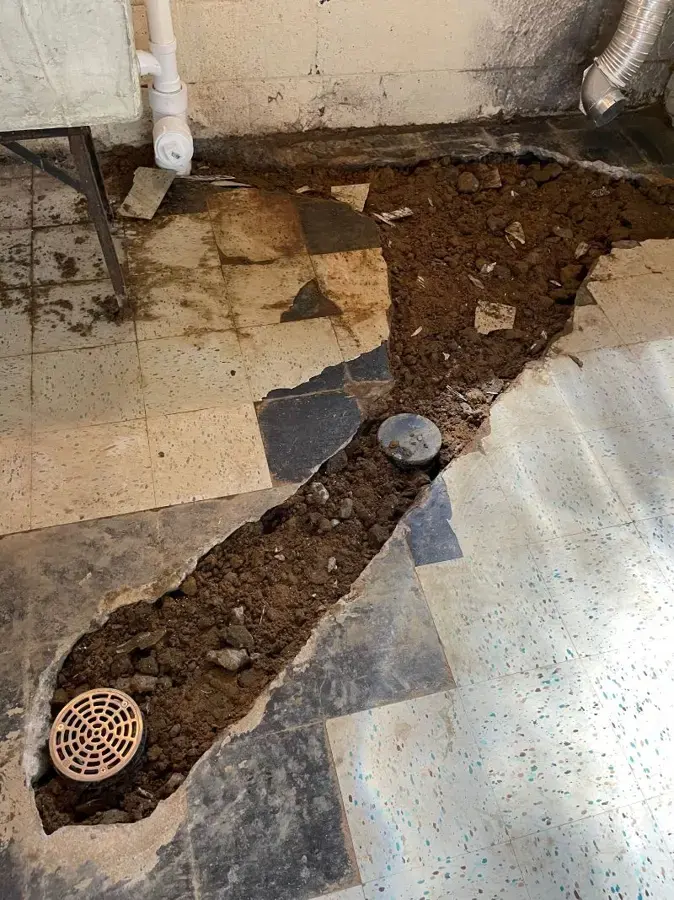
A warm patch on the floor, a wet edge along a wall or a meter that will not stop moving can all point to a leak under the concrete. In Pico Rivera's post-war tract homes, the pipes that run under the slab are often the hot-water pipes, and copper wears through over the decades.
Key takeaways
- A warm floor spot is the classic sign of a hot-water pipe leaking under the slab.
- Pico Rivera homes of this era are slab on grade with no basements, so pipes run through or under the concrete.
- Copper hot-water pipes under the slab can wear through, and the water then rises into flooring and wall bases.
- Shutting off the water at the main stops the damage while the leak is located by a plumber.
- Drying works from the slab up, with lifted flooring, drying mats and LGR dehumidifiers, and ends only when readings come back to normal.
What a slab leak is
A slab leak is a pressurized pipe leaking in or beneath the concrete floor. Because the pipe is under pressure, the water keeps coming until the supply is shut off.
In a slab on grade house there is no crawl space or basement to see the pipe from. The water finds its way up through cracks, joints and the edges of the slab.
Why the hot side fails first
Pico Rivera's original tract homes were built from the late 1940s through the early 1960s. In many of them, copper hot-water pipes run under the slab and wear through with age.
Hot water is rougher on pipe than cold. Heat speeds up wear, so a hot-water pipe is often the one that gives out.
Signs a leak may be under the floor
A leak under concrete does not announce itself the way a burst pipe in a wall does. The clues come in over days or weeks.
- A warm or hot spot on a tile, laminate or concrete floor, even when the heat is off.
- A hot water heater that seems to run constantly or a water bill that climbs with no change in use.
- The sound of running water when every fixture is closed.
- Damp carpet, lifted laminate or cracked grout joints in one part of a room.
- A wet baseboard or a darkened strip along the base of an interior wall.
- A water meter that keeps moving after every tap and appliance is off.
A quick check before calling anyone
A homeowner can narrow down the likelihood of a slab leak with a few steps that cost nothing.
Turn off every tap, the washer, the dishwasher and the ice maker. Then read the water meter, wait, and read it again. If the numbers moved, water is going somewhere.
Walk the floor in bare feet and feel for a patch that is warmer than the rest. That patch often sits right above the leak.
The slab leak warning check takes a homeowner through the same signs in a short list, which makes it easier to describe the symptoms to a plumber.
What to do when you suspect a leak
Water under a slab can run for a long time without any visible flood. The steps below keep the damage from growing while the source is found.
- Shut off the main water supply to the house.
- Turn off the water heater so it does not heat or drain with the supply closed.
- Pull rugs and furniture off the warm or damp area.
- Photograph the spot, the meter reading and any damaged flooring.
- Call a plumber who locates leaks under slabs, and call a restoration crew to assess the wet area.
- Keep the water off until the pipe is repaired or rerouted.
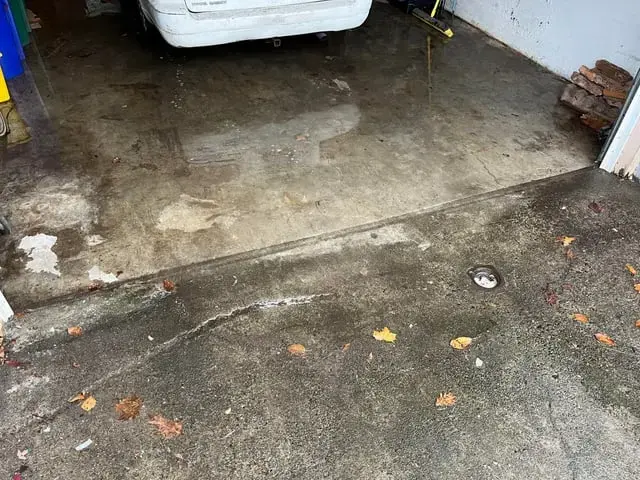
How the floor is dried from the slab up
A slab leak is usually clean water, because it comes from a supply pipe, but it still soaks flooring, wall bases and the concrete itself.
The restoration team starts by lifting the flooring over and around the wet area. Carpet and pad that stayed wet are removed, and hard flooring is checked for water underneath.
Standing water is pulled off the slab. Drying mats are then laid over the concrete to draw moisture out of it, and LGR dehumidifiers pull that moisture from the air.
The edges of walls are checked next. Water that rose through the slab can wick into drywall and baseboards, so the lower few inches of each wall are measured and opened if needed.
Why concrete takes longer to dry than drywall
Concrete is dense and holds water deep inside. It gives that moisture back slowly, so the readings on a slab drop more gradually than they do on a wall.
That is why structural drying is measured and logged each day. The team compares readings to a dry reference, adjusts the equipment and decides whether more mats or another dehumidifier are needed.
A floor that feels dry to the hand can still read wet at the slab surface. Laying new flooring over a slab that has not finished drying is one of the most common reasons for cupping and lifting later.
- Daily readings show whether the slab is trending down.
- Equipment is adjusted by room size and by how wet the materials are.
- Flooring is replaced only after the slab reads in range.
When a slab leak and a burst pipe overlap
Not every leak under the house is a slow one. A fitting or joint can fail suddenly and send water across the floor in a hurry.
That is the situation described on the burst pipe cleanup page, and the first steps are the same: stop the supply, remove the standing water and measure what is wet.
Coverage for this kind of loss depends on the policy, so it helps to check with the insurer and keep every photo and reading.